
Beyond heroism: building operational leverage with AI
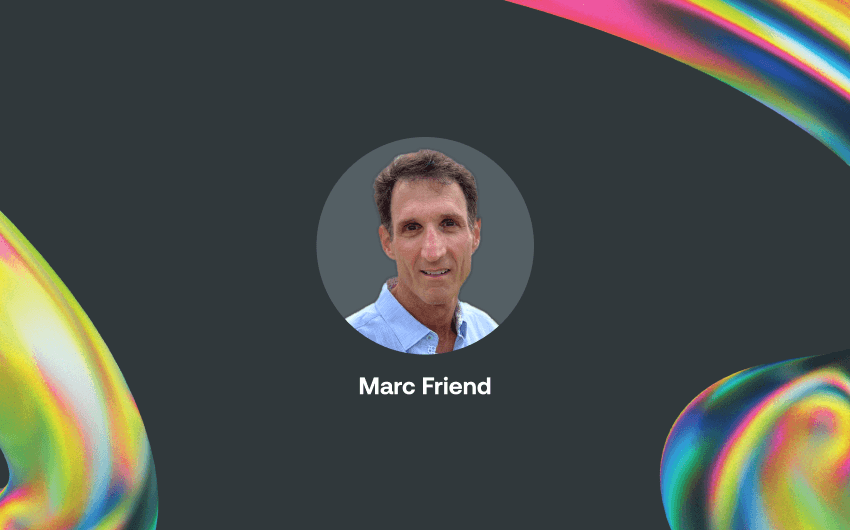
Thomas Gavaghan is joined by Marc Friend, CEO of Sift, to explore how a machine learning-powered fraud prevention company is scaling beyond $100M in revenue while preparing for the next frontier of digital commerce. Marc explains why companies often reach early milestones through individual acts of heroism, but need systems, process, documentation, and operating cadence to achieve true operational leverage at scale.
Marc also unpacks how Sift helps companies think about fraud prevention as a revenue enabler, not just a defensive cost center. He explains how machine learning can help businesses manage transaction risk, reduce unnecessary friction, and improve acceptance rates. The conversation also covers agentic commerce, where AI agents may soon buy and transact on behalf of consumers, creating new questions around authentication, liability, friendly fraud, and trust. Marc also shares how he uses AI internally as a challenger to red-team go-to-Marcet strategy, and why the modern CFO is increasingly becoming a systems architect, strategic thought partner, and chief scorekeeper for the business.
What you need to know
Marc Friend, CEO of Sift, explains how companies can move from heroic execution to scalable operating systems, and why fraud prevention is becoming more central to revenue growth, customer experience, and trust in digital commerce. The through-line of the conversation is that scale requires architecture, whether that means designing teams, improving machine learning feedback loops, preparing for AI-driven commerce, or redefining the CFO as a strategic business partner.
Operational leverage requires more than heroics
Marc describes a common growth-stage challenge: early companies often succeed because talented people find ways to solve urgent problems through sheer effort. But as companies scale, that model eventually breaks down. At Sift, he is focused on creating more repeatable systems through clearer organizational structure, process, documentation, and cadence. That includes building teams with different mandates, such as Sift Labs for longer-term innovation and a continuous engineering team focused on customer requests, bug fixes, and enhancements.
Fraud prevention can be a revenue enabler
For Marc, fraud prevention is not only about blocking bad actors. It is also about helping legitimate customers transact with less friction. Sift helps businesses evaluate risk in real time so they can decide when to let a transaction through, when to add friction through steps like two-factor authentication, and when to block suspicious activity. That makes fraud strategy a direct part of customer experience, acceptance rates, and revenue growth, not simply an insurance policy or back-office control.
Agentic commerce raises new questions around trust
The conversation explores the emerging idea of agentic commerce, where AI agents could eventually search, compare, select, and purchase products on behalf of consumers. Marc explains that this creates difficult questions about authorization and liability. If an agent makes a purchase a consumer later disputes, who bears the risk: the consumer, the agent provider, the merchant, or the payment processor? His view is that merchants may carry much of that risk in the near term, while stronger authentication and human approval steps will likely remain necessary.
AI can be used as a challenger
Marc shares how Sift uses AI internally not just to generate content, but to challenge thinking. He uses AI tools to pressure-test messaging, sales presentations, vertical Marcet strategy, website language, and competitive positioning. The goal is to identify weak assumptions, reduce internal jargon, and improve how the company communicates with the Marcet. For leaders, that makes AI a useful red-team partner, not just a productivity tool.
The CFO is becoming a business architect
Drawing on his background as an MIT-trained systems engineer, venture investor, CFO, and CEO, Marc argues that the CFO role has expanded well beyond financial reporting. In his view, the CFO should be a strategic thought partner to the CEO, a chief scorekeeper for the organization, and a business architect who understands how the operating system fits together. That requires financial discipline, but also cross-functional judgment, pattern recognition, and the ability to help the company find points of leverage.
Additional topics covered in this episode
How Sift is organizing engineering teams to balance long-term innovation with immediate customer needs.
Why machine learning models need feedback loops, labels, and transparency to build trust with customers.
How professional services and customer success contribute to long-term retention in enterprise SaaS.
What Marc’s MIT engineering and venture capital background taught him about systems, patterns, and scale.
Why resilience, challenge, and “walking through walls” shape Marc’s approach to hiring and leadership.

Marc Friend, CEO, Sift
Marc Friend is Sift's Chief Executive Officer. As a Silicon Valley veteran and current tech CEO-investor, he blends operational leadership, venture backing, and discipline to build growth-driven companies.

Blog
ISO 20022 adoption is just the beginning: What to do now to lead in the new payment landscape
Learn more